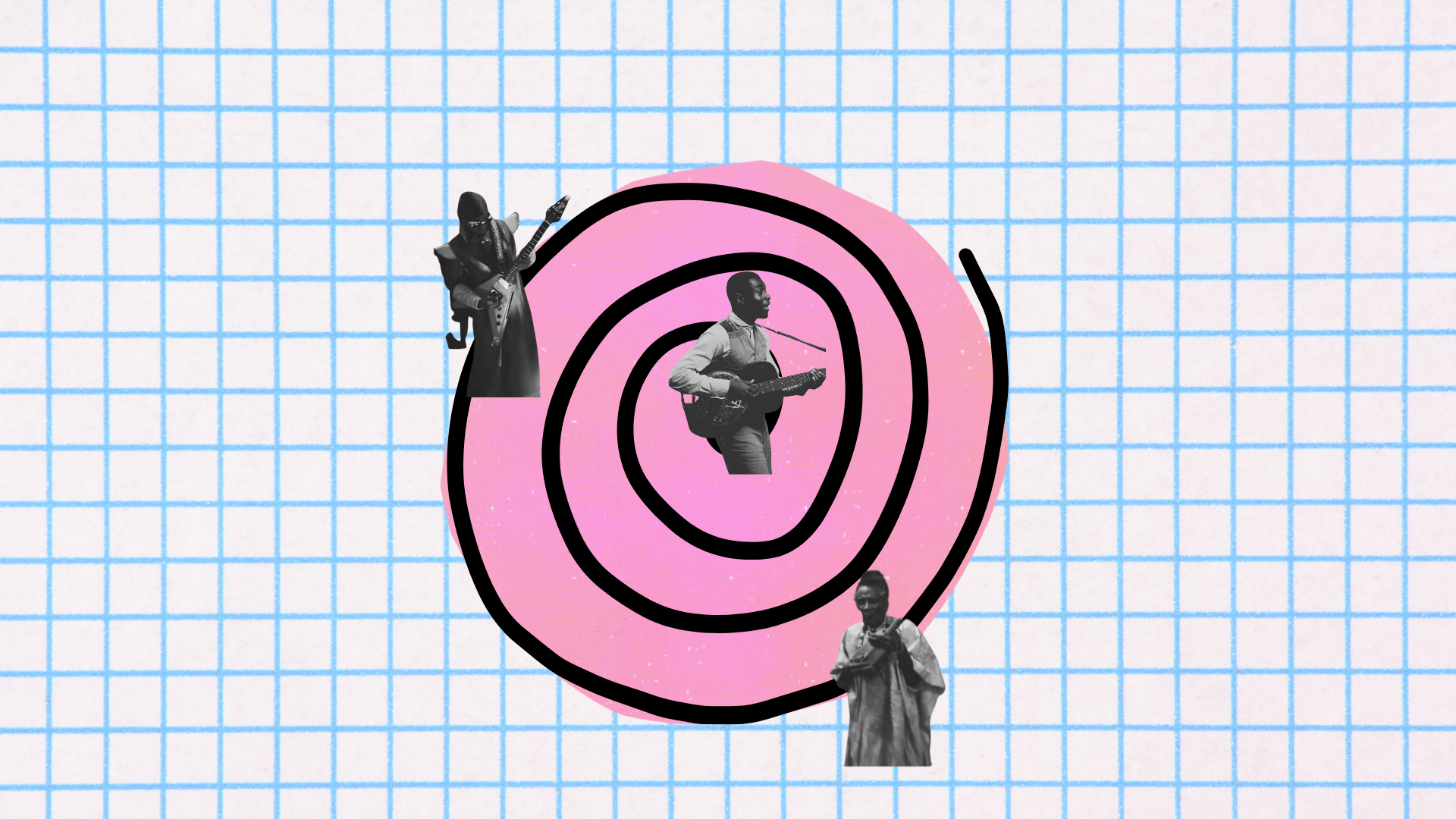
Most people think Afrofuturism equals Black Panther, spaceships, and high-tech utopias. Syracuse professor Isiah Lavender III offers a deeper reading.
Grounded in the Akan principle of Sankofa — which translates to “go back and get it” — he calls it “future-past.” The term captures something fundamental about how Black temporal consciousness operates, something linear futurism consistently overlooks. The Sankofa bird flies forward while looking backward, symbolizing taking from the past what is good and bringing it into the present to make positive progress.
The Black Experience as Science Fiction
Lavender argues that the Black experience in America IS science fiction. Through a trans-historical rereading of texts, he highlights the ways Black experience has always been an experience of spatial and temporal dislocation akin to science fiction.
People forced onto ships by aliens, transported to alien lands, made to speak alien languages, surviving impossible conditions through speculative thinking. These are literal descriptions of what enslavement required: imagining survival under conditions designed to make survival impossible.
Future-past means seeing classic Black stories as inherently speculative. Solomon Northup’s kidnapping becomes an alien abduction narrative — a free man walking through Washington DC one moment, waking up in chains the next, transported to a world where the fundamental rules of reality no longer applied. Harriet Jacobs’s seven years hidden in an attic becomes a pocket dimension story. Frederick Douglass, through literacy, becomes a cyborg figure who transforms his body through technology.
These readings reveal the actual mechanics of how Black people navigated conditions that Western rationality said were unsurvivable. Speculative thinking functioned as survival technology.
Functioning Prototypes
Lavender uses “future past” — expressing the idea of a future event from a past viewpoint — to examine how Black identity, culture, and history intersect with speculative futures, alternate realities, and imaginative technologies. The most radical futures were often embedded in past acts of resistance and survival. The Underground Railroad functioned as a speculative network — a working model of organized care and collective liberation. Maroon communities operated as speculative societies, testing what governance could look like outside the plantation system. Black churches functioned as speculative institutions, rehearsing forms of autonomy and collective decision-making that couldn’t exist in the formal political sphere.
These functioning prototypes of alternative futures were tested under the most hostile possible conditions. They demonstrated what organized resistance could build when survival itself required inventing new forms of social organization.
Excavation as Method
This temporal complexity challenges how we think about futures work entirely. The question shifts from “what’s coming next?” to “what futures were already here?” The work becomes archaeological. You excavate the speculative technologies that marginalized communities developed under conditions of impossibility.
Futures work becomes recognition. You learn to see survival under impossible conditions as a form of world-building. You understand that every resistance movement contains blueprints for alternative social arrangements. You recognize that communities creating new worlds from nothing were demonstrating futures-making as lived practice.
The implications extend beyond Afrofuturism. Every survival story under oppressive conditions represents a form of speculative thinking. Every community that created new worlds from nothing demonstrates futures-making as lived practice. Queer ballroom culture in the 1980s functioned as speculative world-building, creating entire social universes with their own hierarchies, their own economies of recognition, their own systems of care and family formation. Disabled communities building mutual aid networks practice what interdependence could look like at scale.
The Futures That Have Been Here
As Lavender frames it, slave narratives “lay bare a science-fictional American existence,” creating a legacy of resistance that enables readers to reimagine and redefine resistance in new terms, new words, and perhaps new worlds.
The futures we need have been here. They were built by people surviving conditions that required inventing new worlds. They were prototyped by communities that had no choice but to speculate, to imagine, to create alternatives because the present offered nothing.
Those futures are still here, still being built, still functioning in the margins and the gaps and the spaces where the dominant system loses its grip. The work becomes seeing what’s already arrived, recognizing the futures that have been hiding in plain sight, understanding that transformation requires attention.